Operations CMS · AI agents · Self-hosted
Nordblooms Ops
A floral CRM and operations platform I designed, built and run for Nordblooms, a preserved-flower studio in New York: leads, quotes, e-signed agreements, recipes and pricing, production, purchasing, inventory, invoicing, messaging and reports, connected to the Shopify store. Beside it run two AI agents, one for SEO and one for outreach, that propose their work and wait for a person to approve it.


One screen answers what needs a decision today.
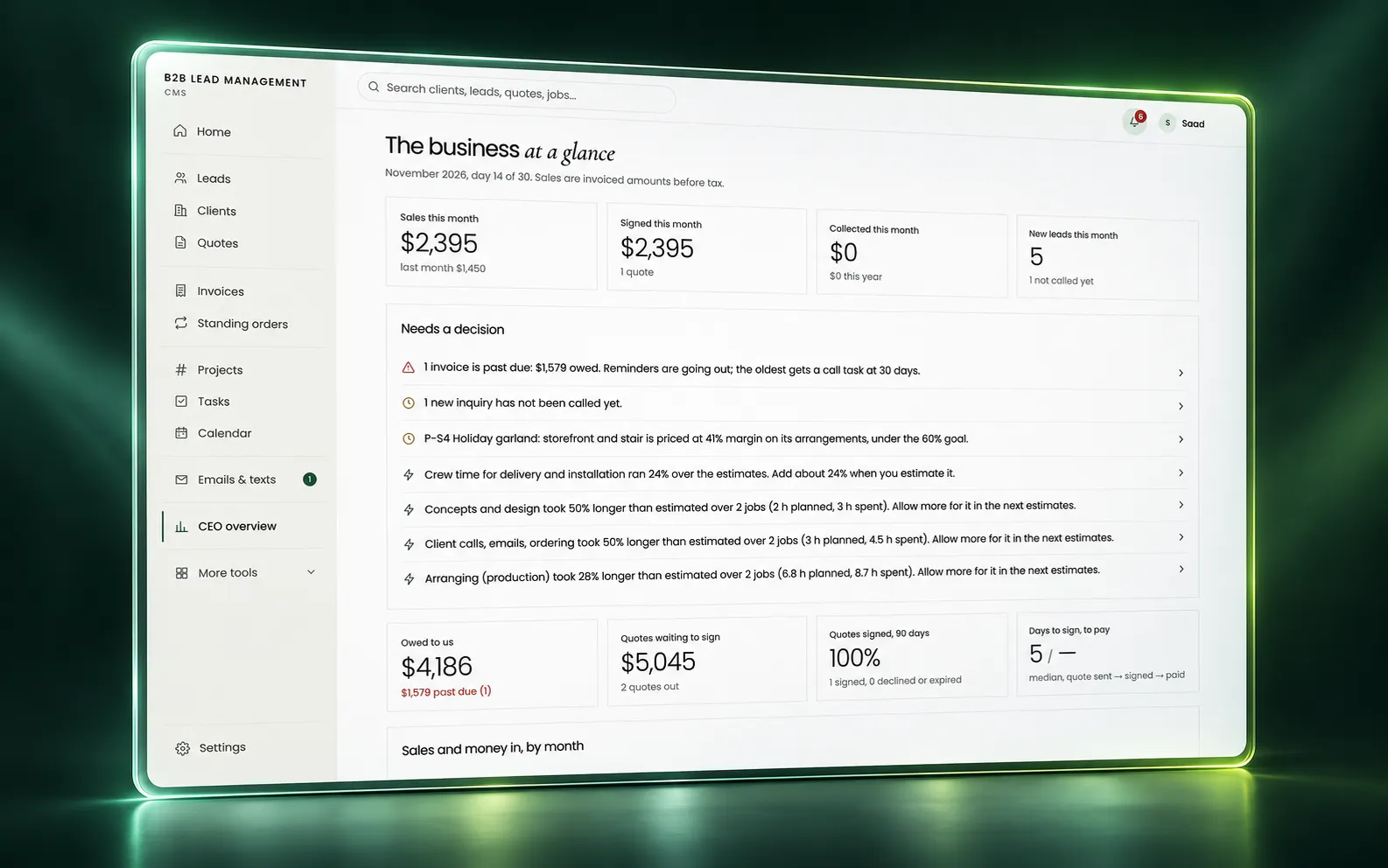
The CEO overview puts the month’s sales, signed and collected money and new leads on top, then lists what needs a person: an overdue invoice, an inquiry nobody has called, a quote priced under the margin goal, and the kinds of work that keep running longer than their estimates.
From the first inquiry to the last invoice.
Every screen is shown on the portal’s sample data. Click any of them to see the real capture.
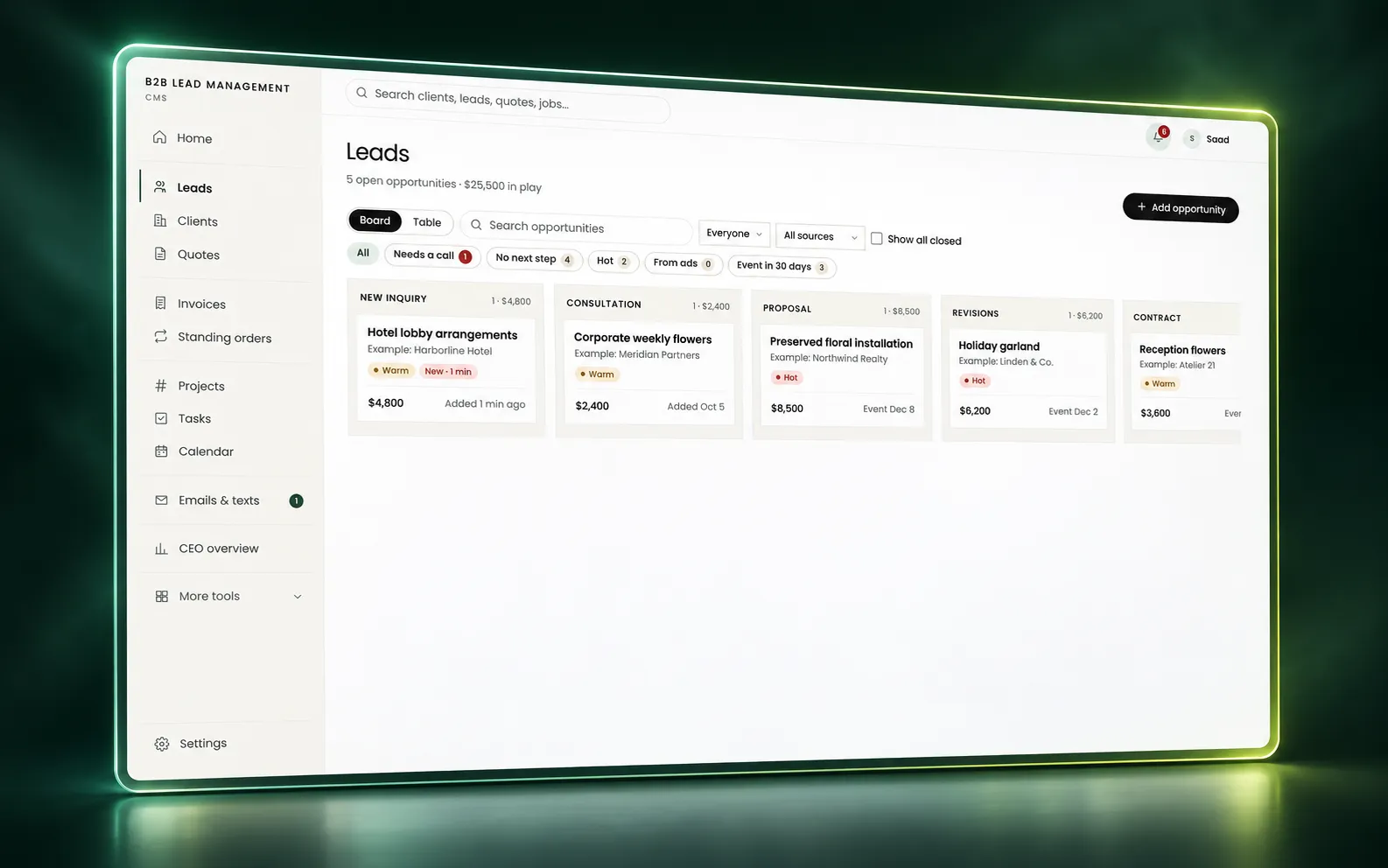
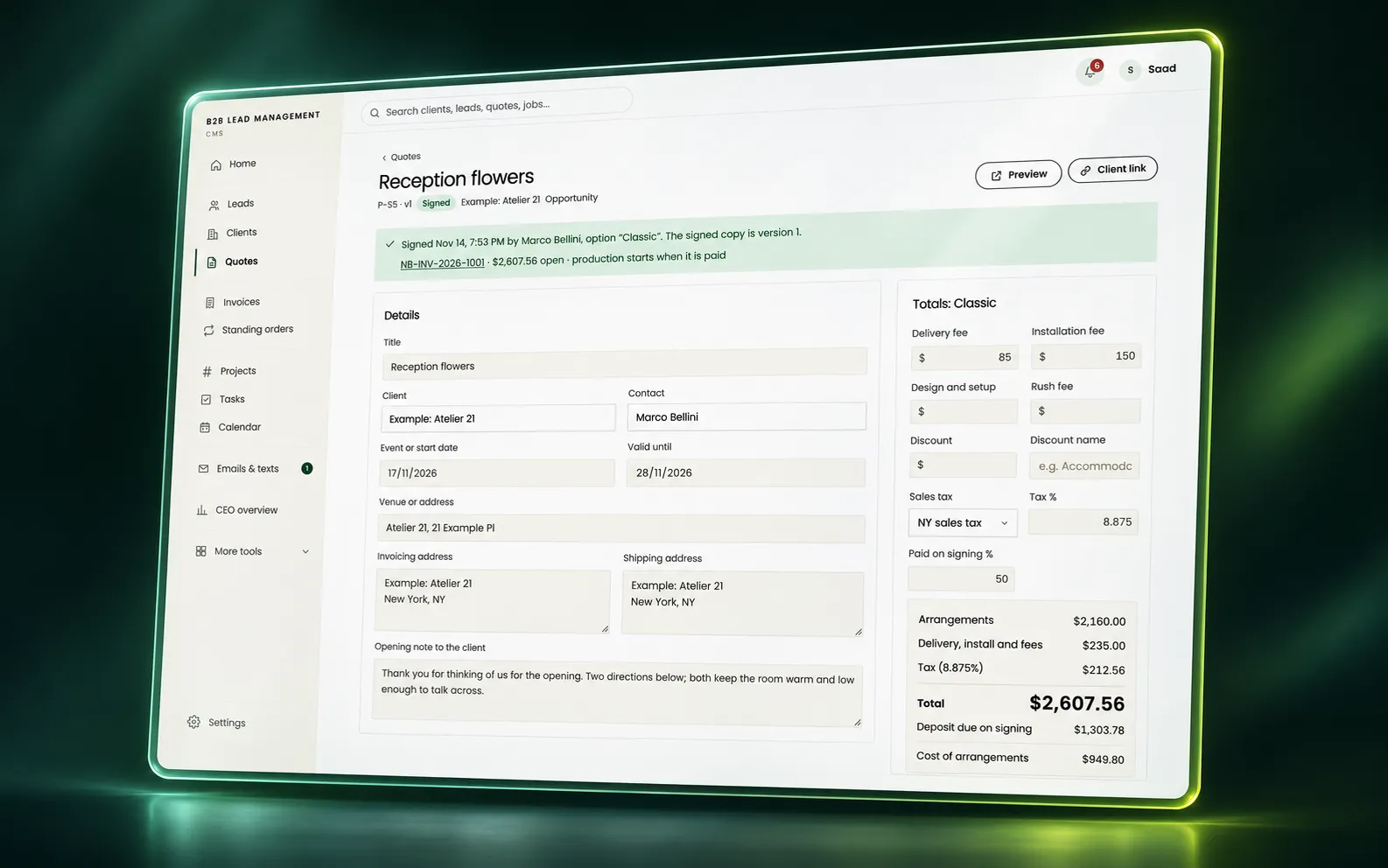
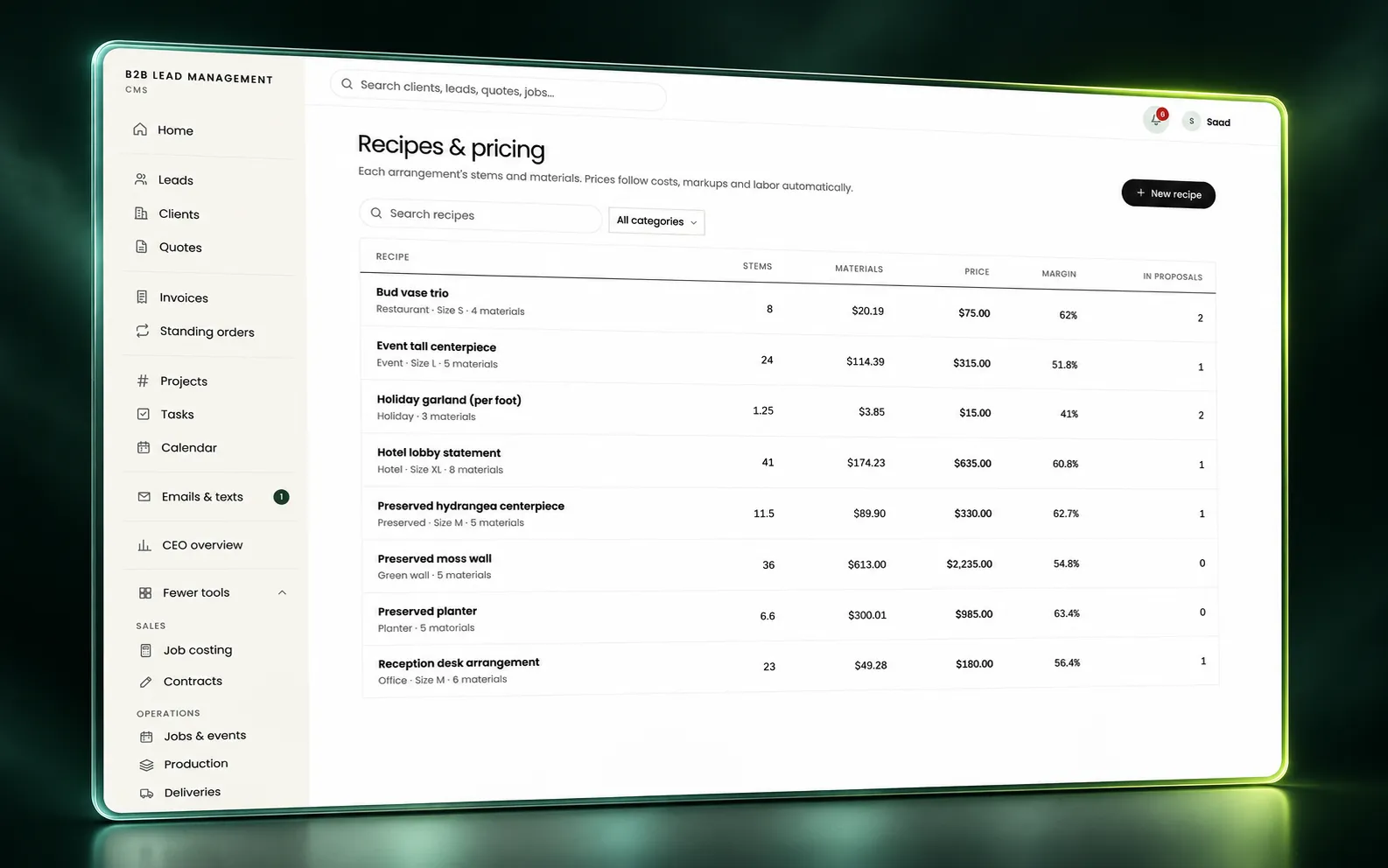
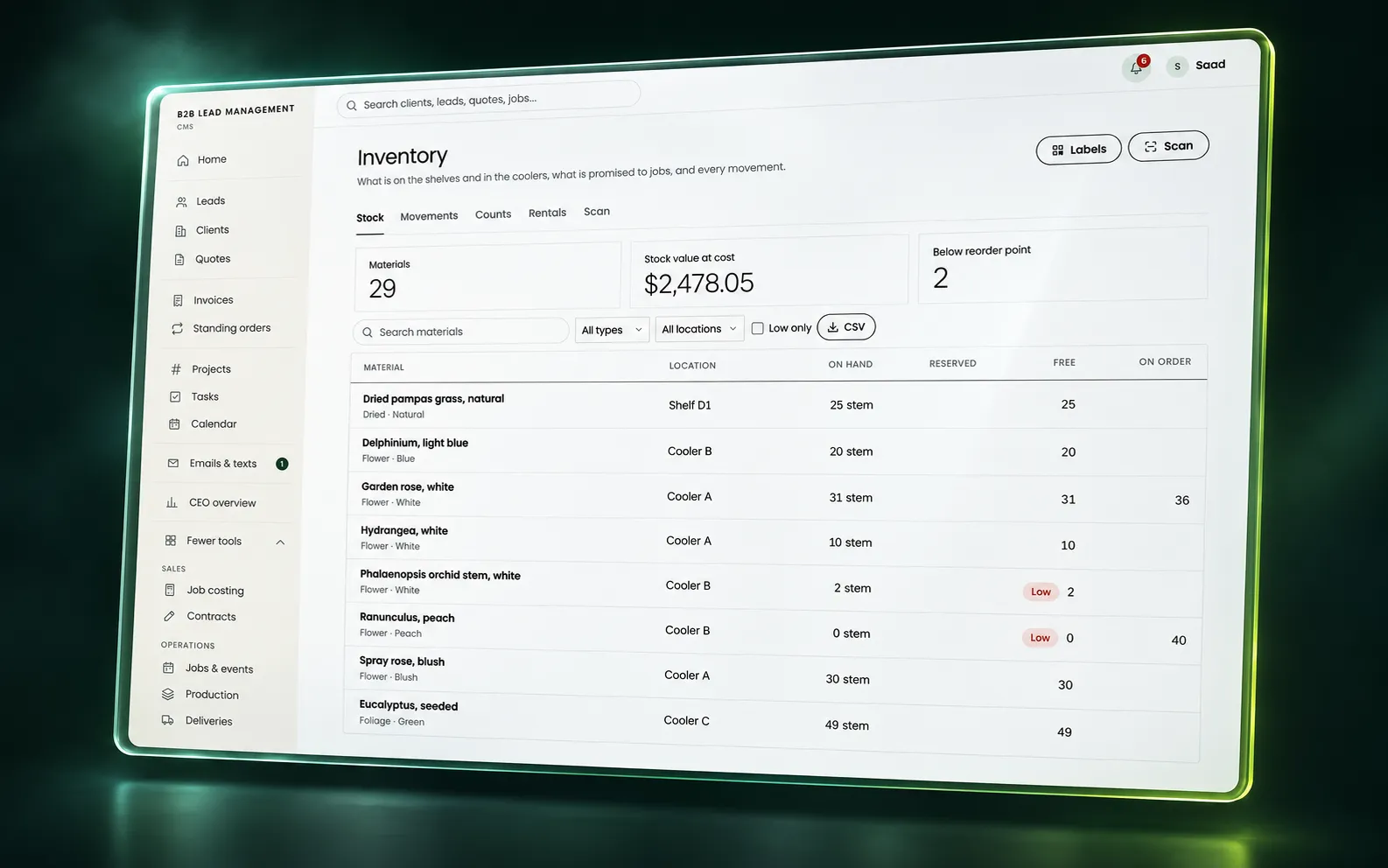
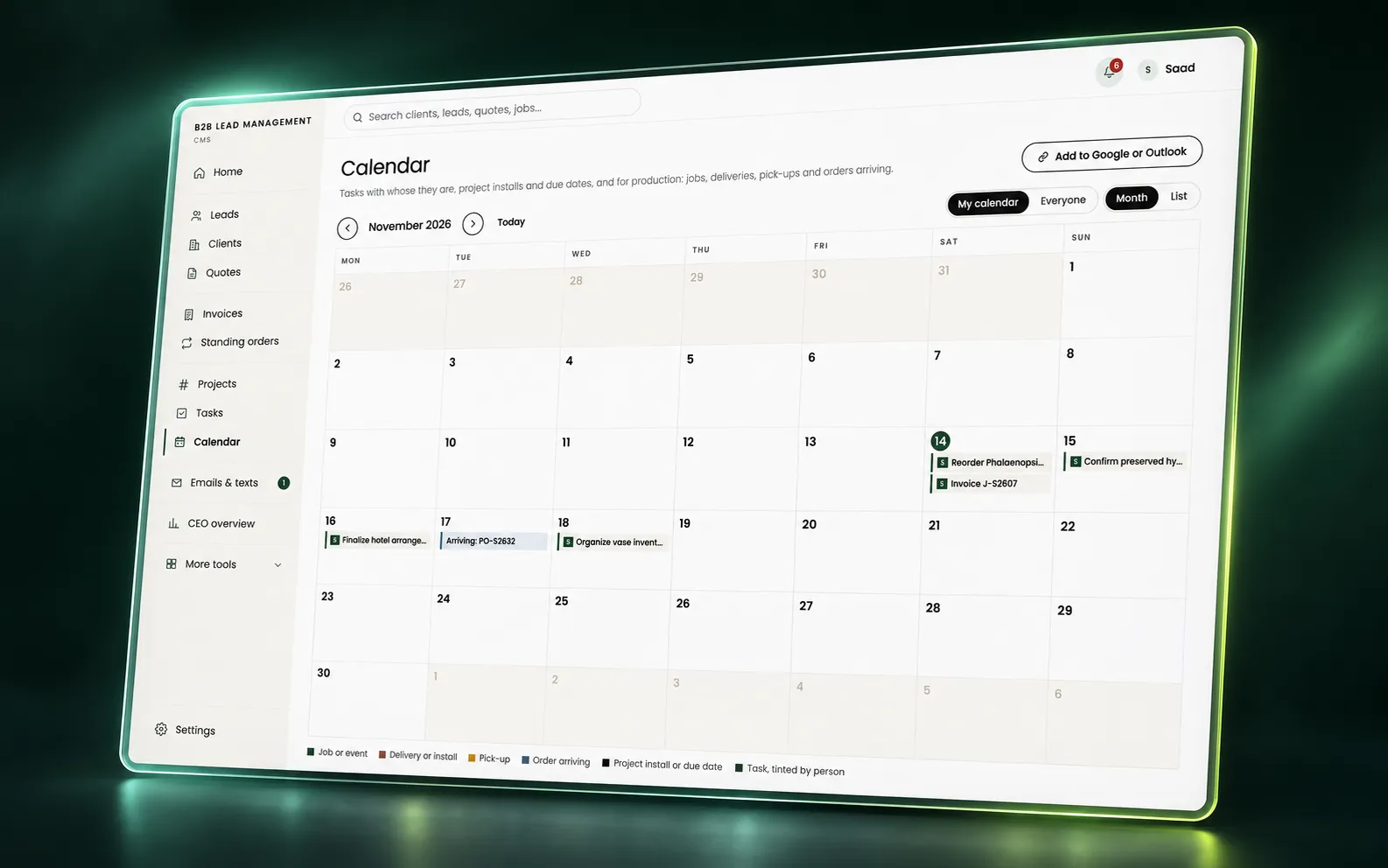
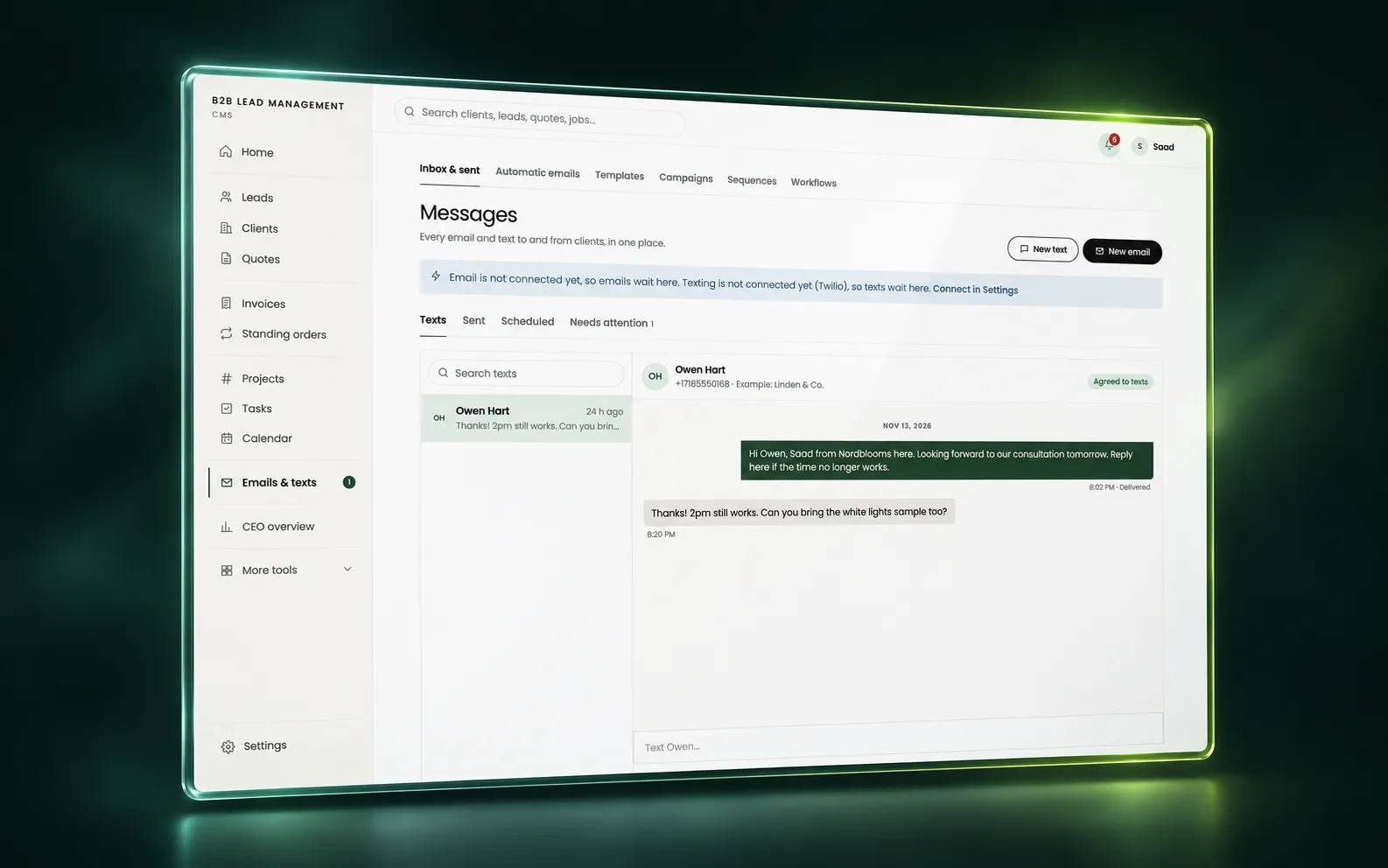
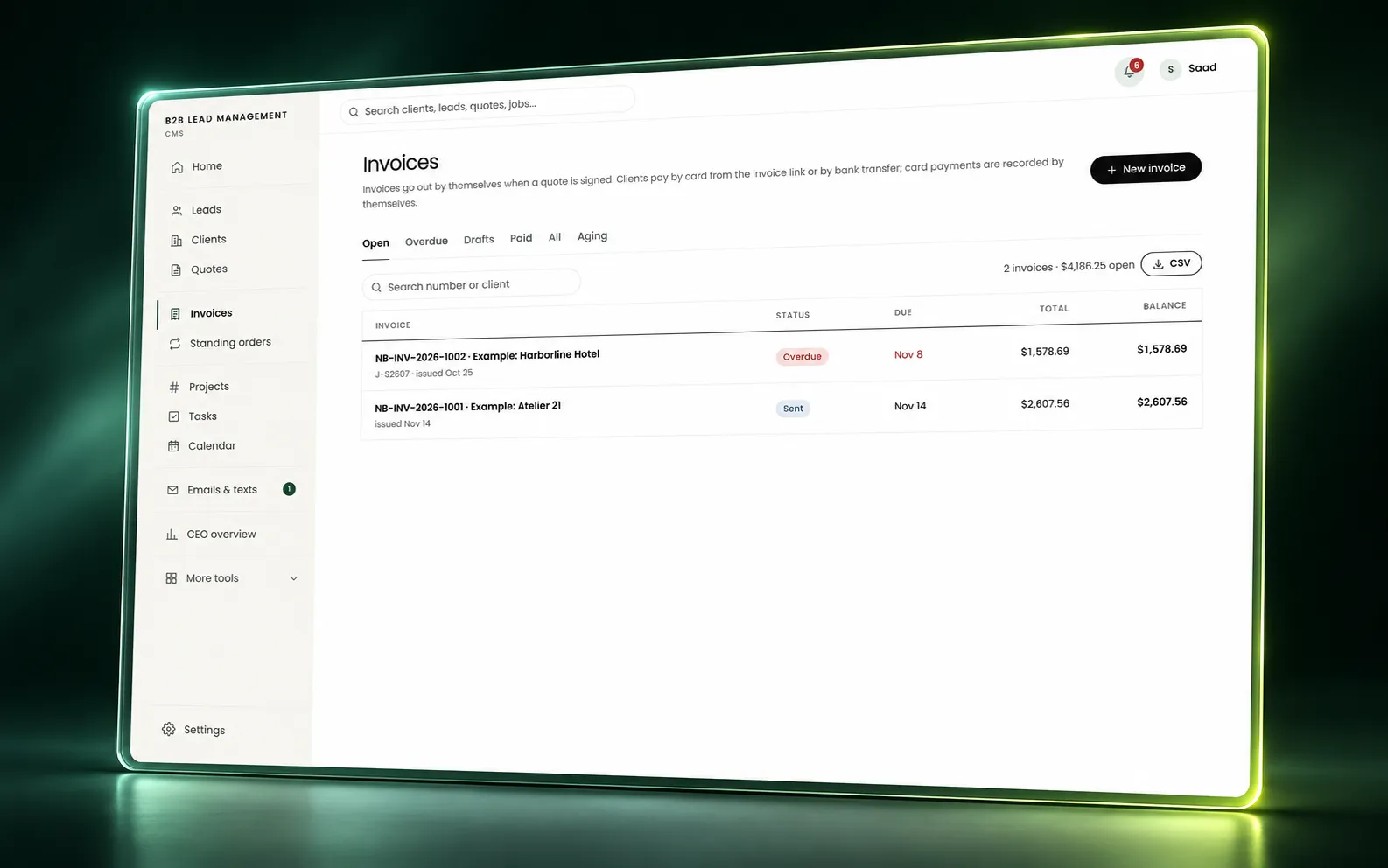
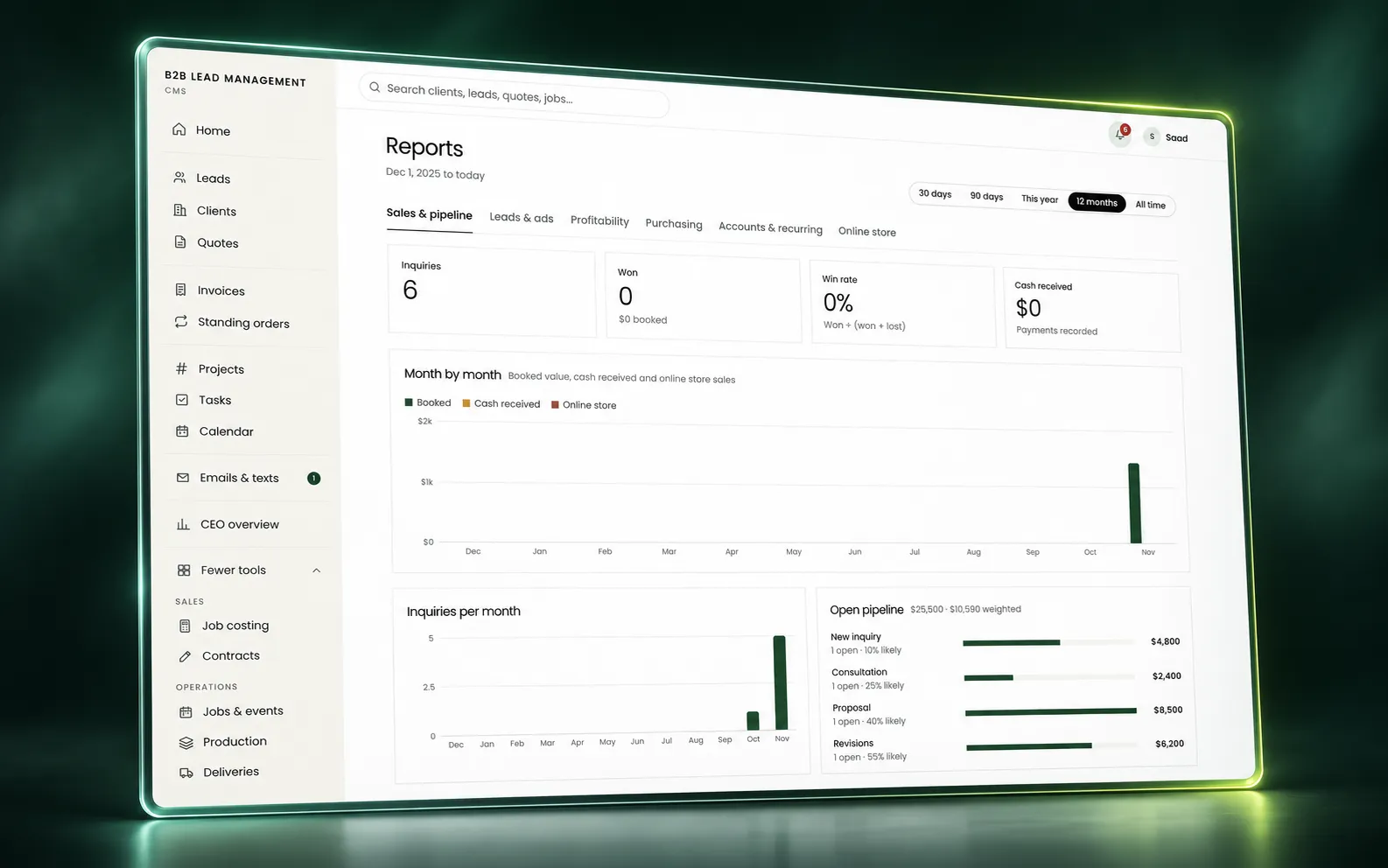
Built from the studio’s own board, not from a CRM template.
The brief was the studio’s planning board: the modules they wanted on the home screen, the sales pipeline, the production stages their designers already used, and the automations they would switch on first. It had to be friendly on a phone, calm to look at, and connected to the Shopify store.
Website enquiries land in the pipeline on their own through a signed webhook, duplicates are caught, and a new lead shows up as needing a first call. Payments are recorded against invoices, with pay links and reminders, so the studio sees what it is owed without a spreadsheet.
What it covers
- A sales pipeline from inquiry to consultation, proposal, revisions, contract and booked, with an activity log and tasks.
- Quotes with options, moodboards, versions and comments that the client accepts online.
- Agreements from templates, signed with a drawn e-signature.
- Recipes with live cost, price and margin, and a stem calculator.
- Jobs with work orders per designer, material shortages, and stock deducted automatically at quality check.
- Purchasing that turns shortages into vendor orders rounded to bunches and boxes, then receives them.
- Inventory by location with counts, rentals, QR labels and camera scanning.
- Invoices with deposits and instalments, payments, credits, aging and reminders.
- Reports on win rate, weighted forecast, profit by job and client, and vendor spend.
Agents that do the work and ask before they act.
SEO agent
Every Monday it reads the catalogue, pages, blog posts and redirects through the Shopify Admin API, pulls Search Console figures and loads the key pages of the live site. Scripts find the problems; Claude drafts what scripts cannot write, such as titles, meta descriptions and alt text, and a check refuses any draft that breaks the studio’s voice guide.
- The report arrives as a pull request. Merging it approves the changes; nothing touches the store before that.
- A daily run applies what was approved and records the value each change replaced.
- Each live change is judged on click-through against the whole site over the same days, and one that clearly hurt comes back as a task with its rollback.
- It also checks a fixed set of buyer questions each week to see whether AI search tools recommend the studio.
Outreach agent
It finds businesses that look like the studio’s best clients, reads each company’s own website for the address it publishes, scores the fit from one to five and writes one personal opening line per company. The week’s list goes out as a pull request and nothing is sent until it is approved.
- The portal sends from a separate outreach mailbox: four emails over about 16 days, at most ten new companies a day.
- A reply stops the follow-ups and tells the team; a bounce or an opt-out ends it for good.
- Sending pauses on its own when bounces among the last 50 first emails pass 3%.
- Only addresses a company publishes on its own domain; nothing guessed from a name, and never clients or shop customers.
Automation that a small studio can trust with its clients.
Approval before anything changes.
Both agents open a pull request and wait. Merging it is the approval; closing it turns the week down.
Every change can be undone.
The SEO agent records the value each change replaced, so a change that hurts results comes with its rollback.
Costs stay behind roles.
Staff who should not see costs and margins never receive them: the server leaves them out, not just the screen.
An audit log and nightly backups.
Who changed what, and a fresh copy of the database every night, with 21 kept.
Outreach from its own domain.
The outreach agent refuses to send from the store’s main domain, so a cold email can never hurt the mail clients rely on.
No tracking in outreach.
No open or click tracking, the studio’s address and an unsubscribe line in every email, and a one-click unsubscribe.
The stack, named honestly.
- Node 24
- node:sqlite
- React
- Vite
- Kubernetes (k3s)
- GitHub Actions
- Shopify Admin API
- Klaviyo webhooks
- Twilio
- Google Search Console
- Claude
What this case study should prove.
I can sit with a business, turn the way it already works into software it runs every day, host it myself, and add AI where it saves real hours without ever letting it act unchecked.
If you remember one thing
- A complete floral CRM and operations platform, self-hosted and connected to Shopify.
- Sample-data screens throughout, so no client’s information is shown.
- An SEO agent that reports weekly and changes nothing until approved.
- An outreach agent in development, built around consent and deliverability.